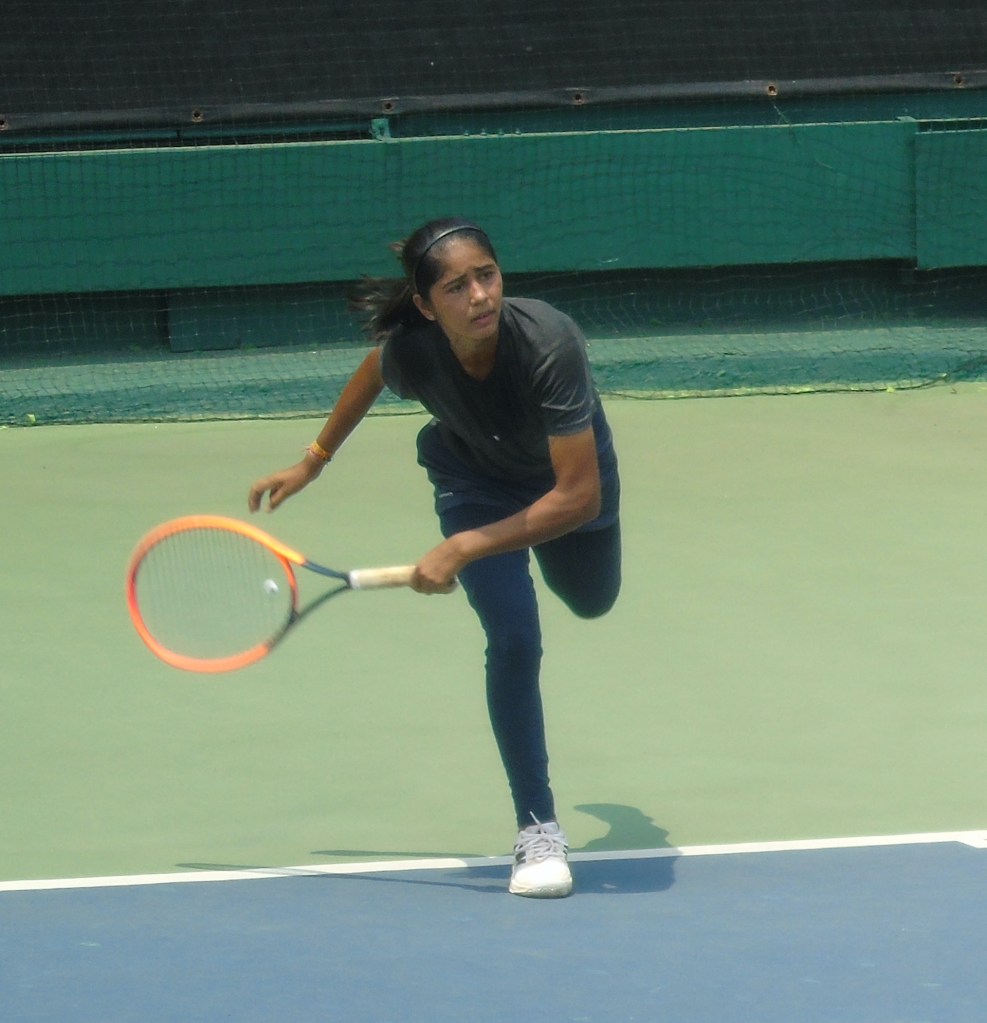
Dipakbhai Kanabar has a ritual at the end of his daughter’s every match, irrespective of the result. He prays to his family goddess, the holy trinity, and Sri Ramachandra.
Eyes closed, he chants his prayers silently. It is elaborate, lasts more than a couple of minutes, he ends it by pressing his rudraksha bead (word around his neck and concealed under his shirt) against his eyes in respect, and a similar namaskar to the sacred thread in his right wrist.
He says it follows the ritual religiously, even when travelling outside India.
“Why not? I have to thank, acknowledge the divine’s blessings. Sachin Tendulkar looks up to heaven after scoring a century, and even the foreigner crosses himself. Why shouldn’t we?”
Did he go through with his prayer routine even in Australia earlier this year when Jensi won the Australian Open Asia-Pacific Under-14 girls’ title?
“Of course! In fact, when she won the final, we chanted ‘Har Har Mahadev’ in a loud chorus. But that is only when she wins the final!”
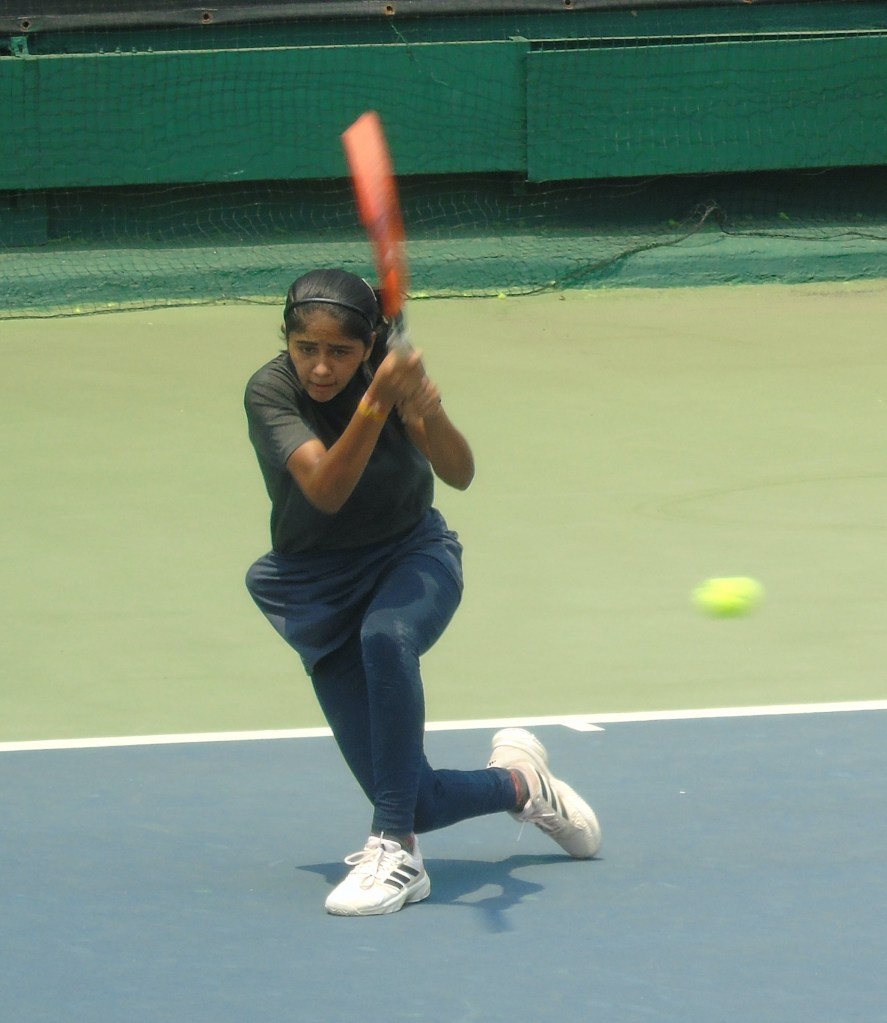
Needless to say, as tennis parents come, Dipakbhai belongs to a rare breed.
A maths and science teacher in a government aided school in Junagadh, in Saurashtra, Dipakbhai was driven by a wish, an ambition maybe, to see his daughter play tennis at the highest level.
Jensi was three and a half years’ old when she first held a racquet in hand. Everything about her tennis is home-made, Dipakbhai-made to be accurate.
After the initial years when she was learnt her first lessons from a coach, as in a coach, Jensi has been tutored by her father and a tight-knit group of his friends. He has two courts built exclusively for her. While Dipakbhai and his wife take turns to travel with Jensi, his friends watch her matches, in person or online when live streaming is available, and share their assessment post-match.
Oddly, Jensi, a vegetarian, practises mostly or only with Dipakbhai and his ‘team’. For some reason, he has been reluctant to enrol her in a professional academy.
And it has worked so far.
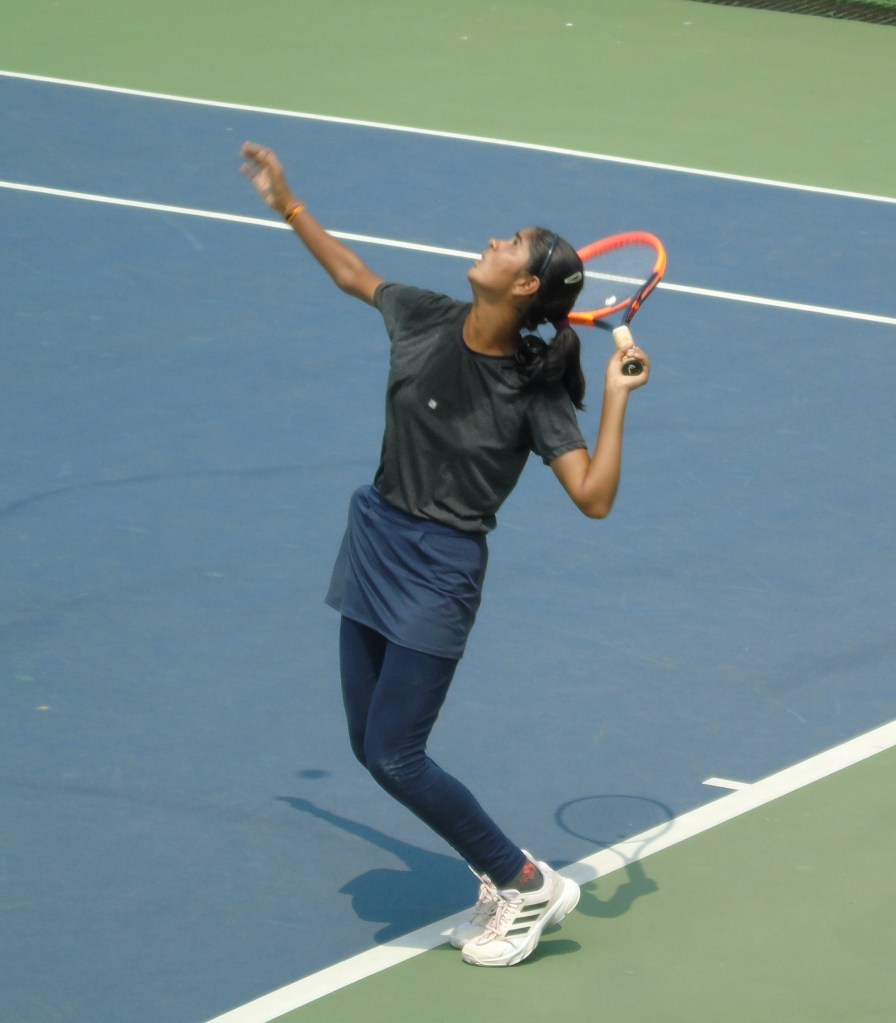
A case in point was her first-round win over Satima Togeren in the ITF Asia-Oceania Closed junior championships in Pune on Monday, April 20th.
The 14-year-old displayed poise and grit to defeat her Kazak rival, three years senior to her, 6-4, 6-2.
Blessed not so much in terms of powerful weapons, the left-handed Jensi packed enough substance in her fragile frame to beat Satima for the second time in as many meetings between them.
She had won 6-4, 6-1 in their previous meeting in a J60 tournament in Guwahati in November.
“In Guwahati the courts were fast and suited Jensi’s game. Here the courts are comparatively slower and she (Satima) is a good server, and was delivering aces,” Dipakbhai said.
“Jensi is still growing (physically), so she relies on placement to get winners. But with courts being slow she had to fight harder today.”
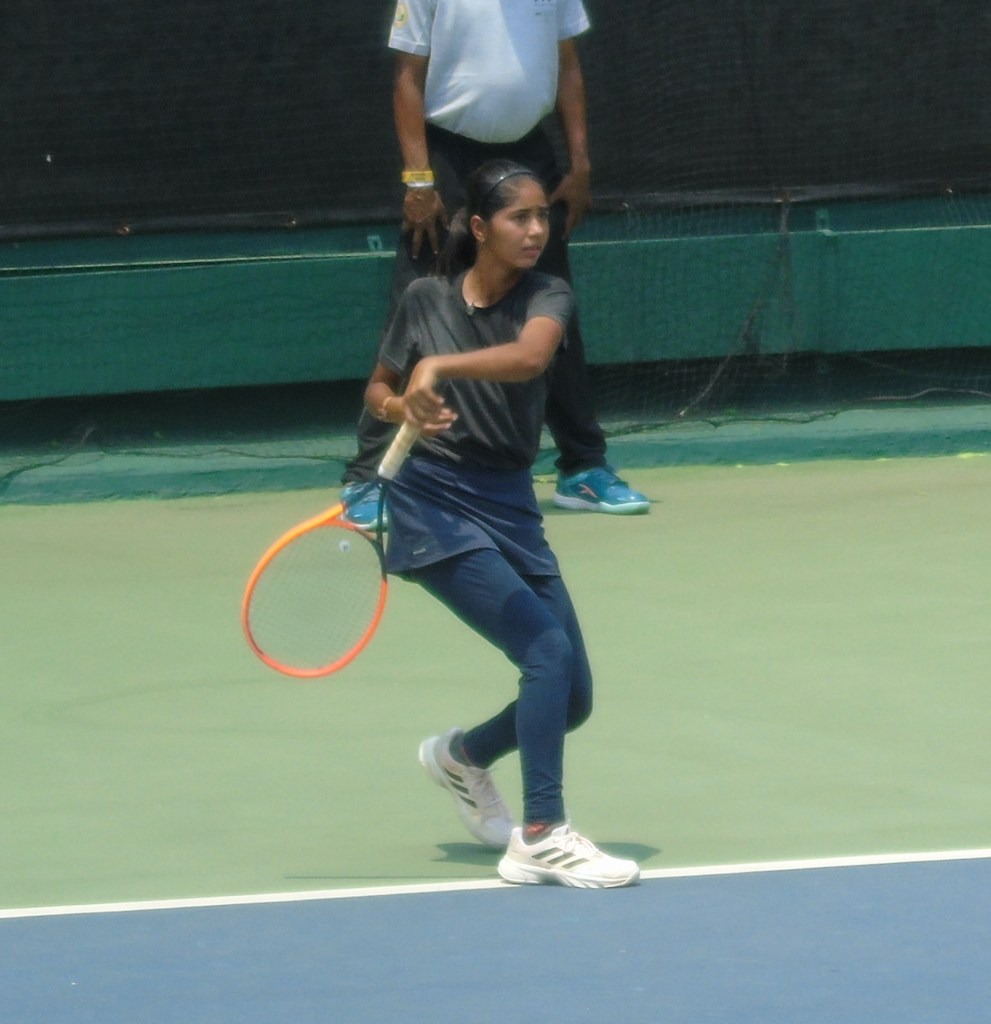
What helped Jensi was her emotional equilibrium and consistency. After breaking Satima in the tenth game to take the first set, she stayed focussed in the second to get the job done even as the latter blew hot and cold, cracking aces and double-faults alternately at will.
But as Jensi takes the next step in her tennis journey, Dipakbhai would only be doing his daughter a favour by having an open mind about where and with whom she trains.
The difference between being self-made and refusing to take help is a thin one. Dipakbhai has cut it fine, so far!

